IC says:
Seria bueno mostrar en cada punto del planeta las cosas que debemos cambiar. Esta iniciativa podria crecer y servir de algo. Creo que hay mucho de desinformacion, pero el mayor problema es el desinteres. El hecho de la basura bajo de la alfombra, el no querer ver para no sentirse mal. Es un cambio de actitud lo que hace falta.
edo40ode | |

ondacaracola  says:
says:
Esta fotografia la saque en una playa de Donostia a la que no voy habiatualmente. En la playa que frecuento hay muchos más desperdicios. Me resulta triste y repugnante encontrar las playas llenas de desperdicios de todo tipo, pero a su vez, me resulta cuirioso el tipo de cosas que pueda un@ llegar a encontrarse:

laz'andre says:
Pollution of the Pasig river is not only due to industrial wastes but to garbage left carelessly by residents living along the river.
A child scavenges for plastic cups which he hopes to sell to recycling companies.
carf says:

Child labour has been increasing steadily in the towns and cities of developing countries as a result of the rapid global urbanisation.
Latin America is among the regions with a high percentage of their children from 10-14 years old in the work force, more than 5 million children or a total of near 10 percent of the age group.
Millions of children work in Latin America in the most intolerable forms of child labour with child labour still rising in the region. Be it labouring in fields from dawn till dusk, sorting out garbage on the immense rubbish tips of the big cities, firing bricks in blazing kilns, digging up stones in quarries or engaging in prostitution on the streets, all these children live and work in wretched conditions. - (ILO)

RobW_ says:
I have also been invited by Gabrielas - thank you.
The story behind this: we used to have a house in the little settlement of Vermont, 10km outside of Hermanus, in the Western Cape province of South Africa, well-known for its superb land-based whale-watching. We go back to stay with friends every year. Walking around the village, one is struck by the number of eco-friendly signs.
Top left, I enjoyed this one, which indicates that small animals have right-of-way when crossing the roads. The one related to poaching is a case of "closing the stable door after the horse has bolted" - this coast was extremely rich in Cape rock lobster and abalone (called perlemoen locally), but over the last ten years these have been aggressively and illegally stripped by poaching gangs, said to be funded and organized by Chinese Triad organizations, who ship the product to the Far East, where abalone fetches very high prices.
The final two signs refer to the fact that, despite a lot of home-building, the viallge still has pristine green belts in which many small animals and birds flourish.
 | oz_britta |
 | CARLOS62 says: Even in our beautiful City ... the sign`s of damage to the Eco system are clear to see, here you can see a old bike that has been thrown into the local river ... rather than someone taking it to the local recycling zone. I work as a Housekeeper in a massive warehouse` so I know all about recycling because I recycle plastic and cardboard all day long. |
| oz_britta |


*roes* says:


lindatxikiakalea says:
NEW YORK: Museum of Modern Art
...y la mierda se hizo arte!!!
elkrusty says:
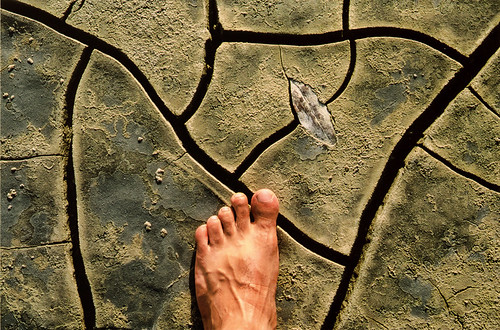
Here there are 2 pics related to conservation issues.1) "Is there any Future for the water?", is inspired in the desertification narrative and shown a dry lagoon in a National Park in Venezuela. Read the full text in thew original post.
2)"Lemna" is about the political-ecological crisis generated by the Lemna boom in the Maracaibo Lake, Venezuela. Everyone has contributed to its contamination. The picture portraits the waste water pipe from a restaurant going directly into the lake. Paradoxically, the owners of the restaurant complains about the presence of the green soup in the lake and blame the goverment.

